

Live CE Events
Innovation Behavioral Health Solutions, LLC is approved by the American Psychological Association to sponsor continuing education for psychologists. Innovation Behavioral Health Solutions, LLC maintains responsibility for this program and its content.
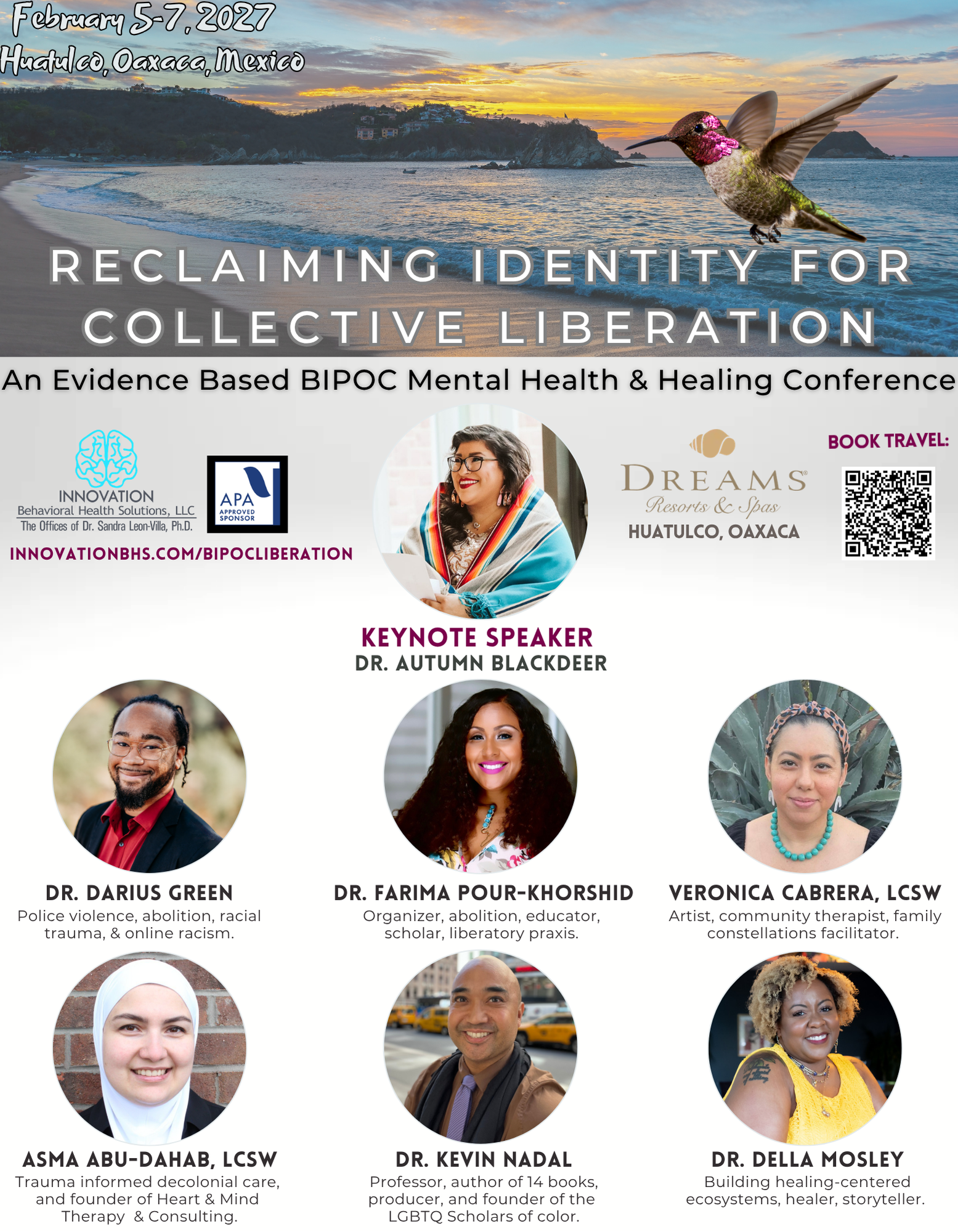
Reclaiming Identity for Collective Liberation Conference
Join us for the 5th Annual Conference in Oaxaca, MX. Earn Up to 18 CEs. Learn More Here.
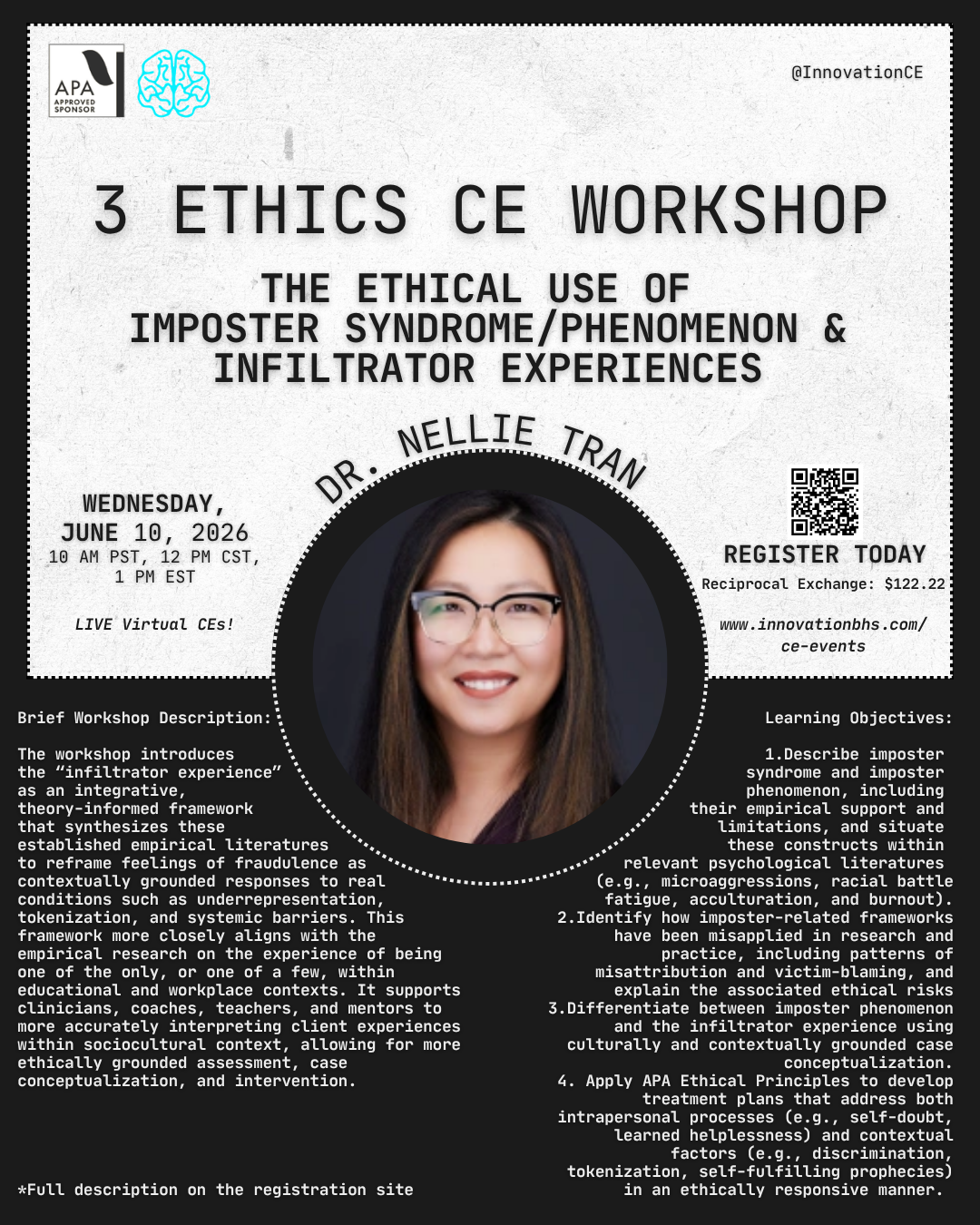
The Ethical Use of Imposter Syndrome/Phenomenon & Infiltrator Experiences
Workshop Description
This 3-hour continuing education workshop examines the use of imposter syndrome and imposter phenomenon within psychological research and practice, with attention to both their empirical foundations (e.g., Clance & Imes, 1978; Bravata et al., 2020) and their limitations. While these constructs are often used to explain persistent self-doubt among high-achieving individuals, this workshop situates such experiences within broader sociocultural and structural contexts. Drawing from peer-reviewed scholarship on double consciousness (Du Bois, 1903), acculturation and assimilation processes (Berry, 1997), microaggressions and environmental microaggressions (Sue et al., 2007; Sue et al., 2019), learned helplessness (Seligman, 1975), self-fulfilling prophecies (Merton, 1948), racial battle fatigue (Smith et al., 2007), and burnout (Maslach & Leiter, 2016), participants will examine how “imposter” experiences may reflect adaptive responses to chronic exposure to exclusion, surveillance, and inequity rather than individual pathology.
Critically, this workshop addresses how imposter-related frameworks have often been applied in ways that produce individual, collective, and organizational harm. Research and critical scholarship have documented how overreliance on individual-level explanations can obscure systemic contributors to distress, including discrimination, underrepresentation, and environmental microaggressions (Sue et al., 2007; Cokley et al., 2017). In practice, this has led to patterns of misattribution, where clients’ accurate perceptions of bias are reframed as cognitive distortions, as well as subtle forms of victim-blaming that place the burden of adaptation on individuals rather than systems. These misapplications raise ethical concerns related to beneficence, nonmaleficence, and justice, particularly when clinicians unintentionally reinforce inequitable conditions or minimize the psychological impact of structural harm.
The workshop introduces the “infiltrator experience” as an integrative, theory-informed framework that synthesizes these established empirical literatures to reframe feelings of fraudulence as contextually grounded responses to real conditions such as underrepresentation, tokenization, and systemic barriers. This framework more closely aligns with the empirical research on the experience of being one of the only, or one of a few, within educational and workplace contexts. It supports clinicians, coaches, teachers, and mentors to more accurately interpreting client experiences within sociocultural context, allowing for more ethically grounded assessment, case conceptualization, and intervention.
Through a combination of lecture, case-based vignettes, guided reflection, and applied exercises, participants will practice differentiating between internalized self-doubt and structurally induced uncertainty, and learn how to integrate this distinction into culturally responsive assessment, case conceptualization, and treatment planning. Emphasis is placed on ethical practice aligned with APA principles, including beneficence, nonmaleficence, justice, and respect for people’s rights and dignity, with a focus on avoiding harm while supporting clients navigating inequitable systems.
Learning Objectives
At the end of this workshop, participants will be able to:
1. Describe imposter syndrome and imposter phenomenon, including their empirical support and limitations, and situate these constructs within relevant psychological literatures (e.g., microaggressions, racial battle fatigue, acculturation, and burnout).
2. Identify how imposter-related frameworks have been misapplied in research and practice, including patterns of misattribution and victim-blaming, and explain the associated ethical risks.
3. Differentiate between imposter phenomenon and the infiltrator experience using culturally and contextually grounded case conceptualization.
4. Apply APA Ethical Principles to develop treatment plans that address both intrapersonal processes (e.g., self-doubt, learned helplessness) and contextual factors (e.g., discrimination, tokenization, self-fulfilling prophecies) in an ethically responsive manner.
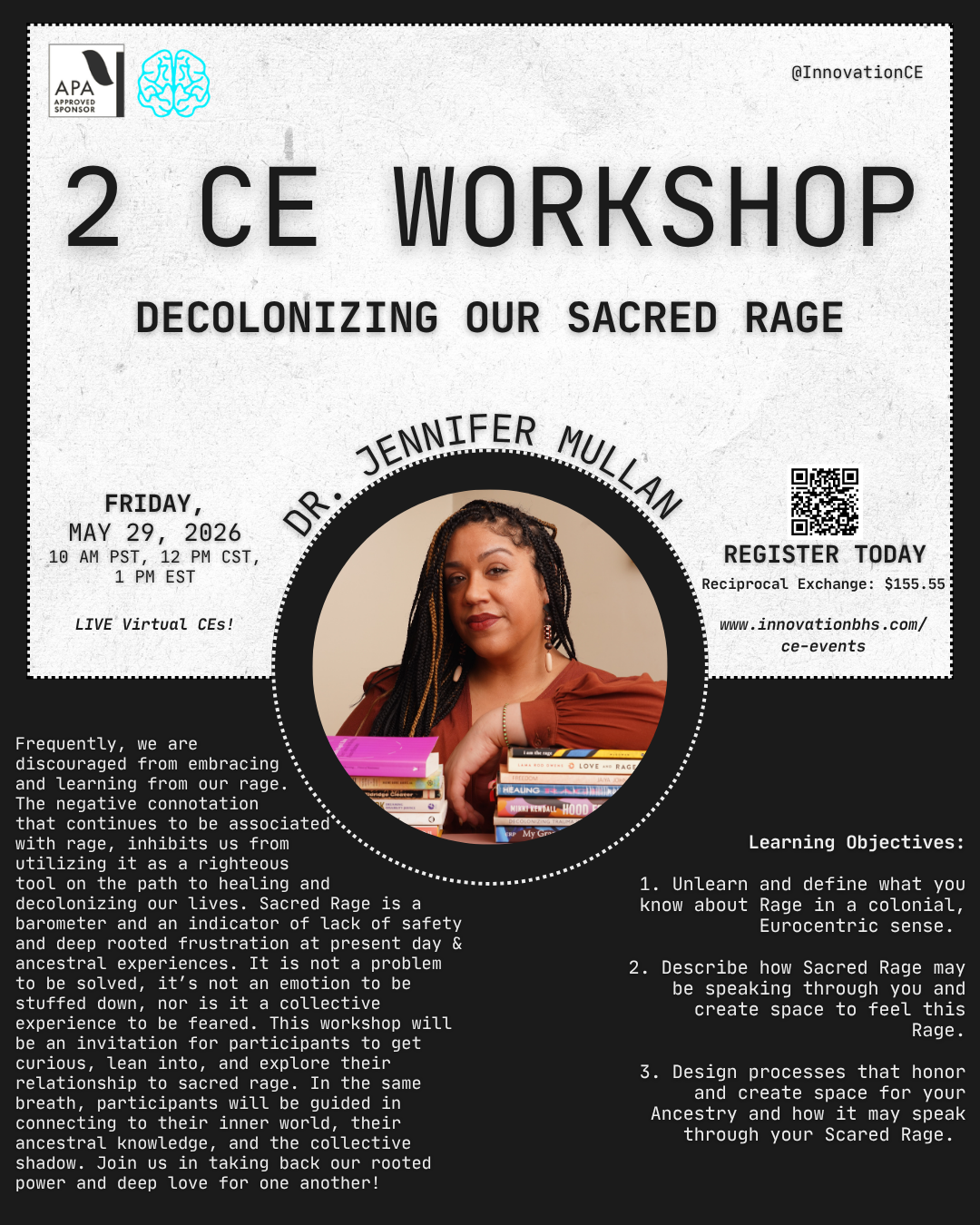
Decolonizing Our Sacred Rage
Frequently, we are discouraged from embracing and learning from our rage. The negative connotation that continues to be associated with rage, inhibits us from utilizing it as a righteous tool on the path to healing and decolonizing our lives. Sacred Rage is a barometer and an indicator of lack of safety and deep rooted frustration at present day & ancestral experiences. It is not a problem to be solved, it’s not an emotion to be stuffed down, nor is it a collective experience to be feared. This workshop will be an invitation for participants to get curious, lean into, and explore their relationship to sacred rage. In the same breath, participants will be guided in connecting to their inner world, their ancestral knowledge, and the collective shadow. Join us in taking back our rooted power and deep love for one another!
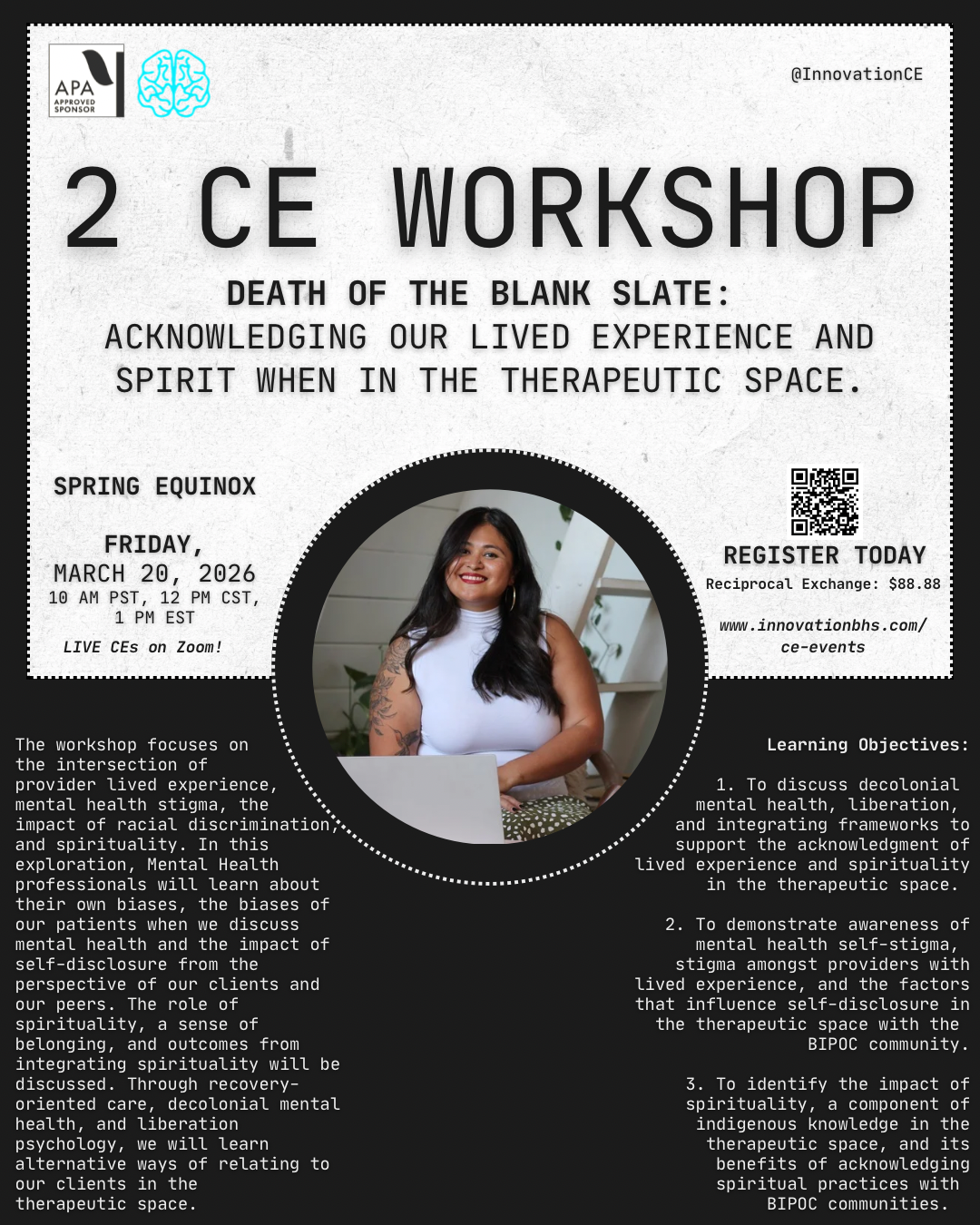
Death of the Blank Slate: Acknowledging Our Lived Experience And Spirit When In The Therapeutic Space
The 2-hour workshop focuses on the intersection of provider lived experience, mental health stigma, the impact of racial discrimination, and spirituality. In this exploration, Mental Health professionals will learn about their own biases, the biases of our patients when we discuss mental health and the impact of self-disclosure from the perspective of our clients and our peers. The role of spirituality, a sense of belonging, and outcomes from integrating spirituality will be discussed. Through recovery-oriented care, decolonial mental health, and liberation psychology, we will learn alternative ways of relating to our clients in the therapeutic space.
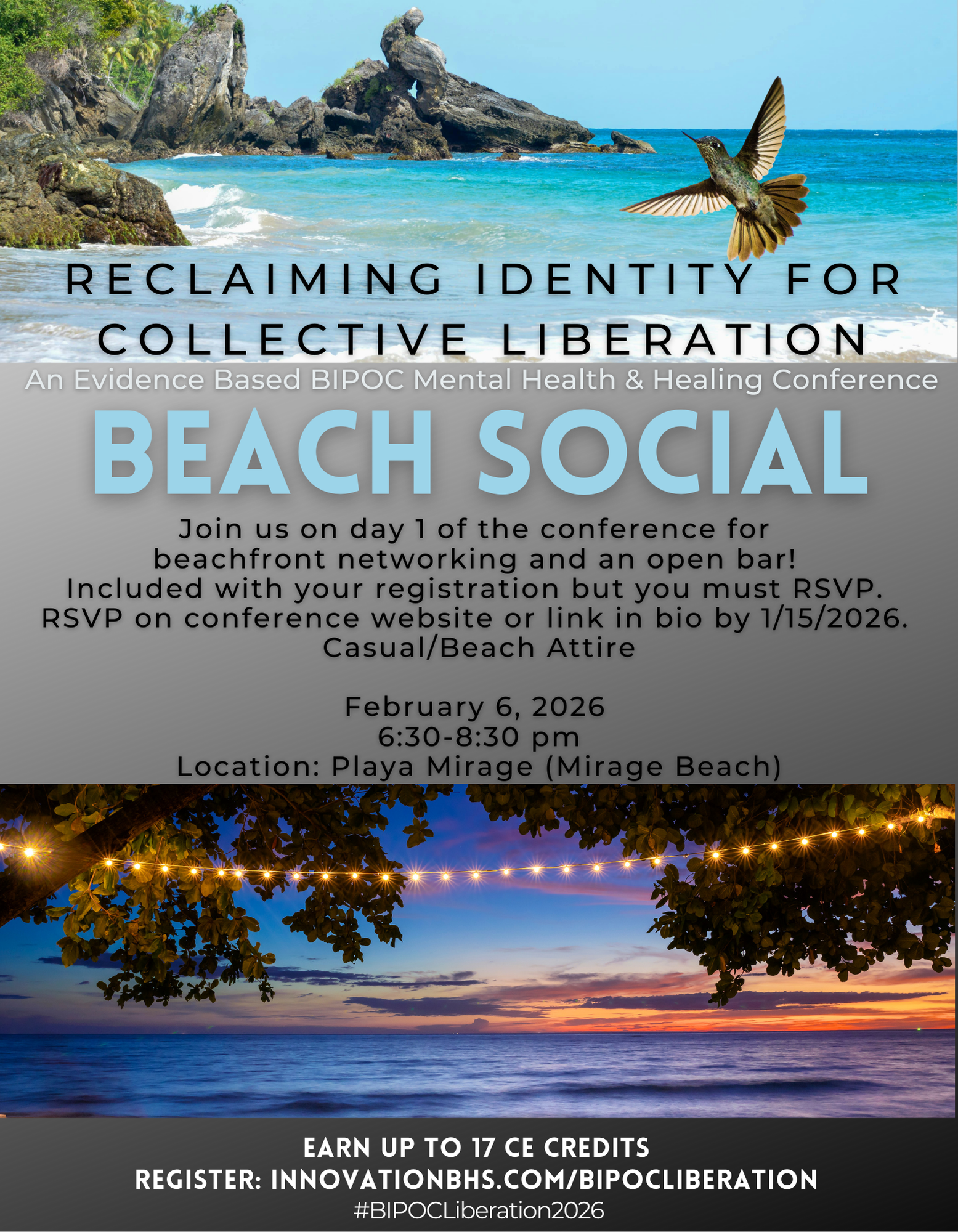
Beach Social Hour
Join us for beach front networking and connection at Playa Mirage beach area. One guest included per registration. Must RSVP by 12/31/2025 to attend.
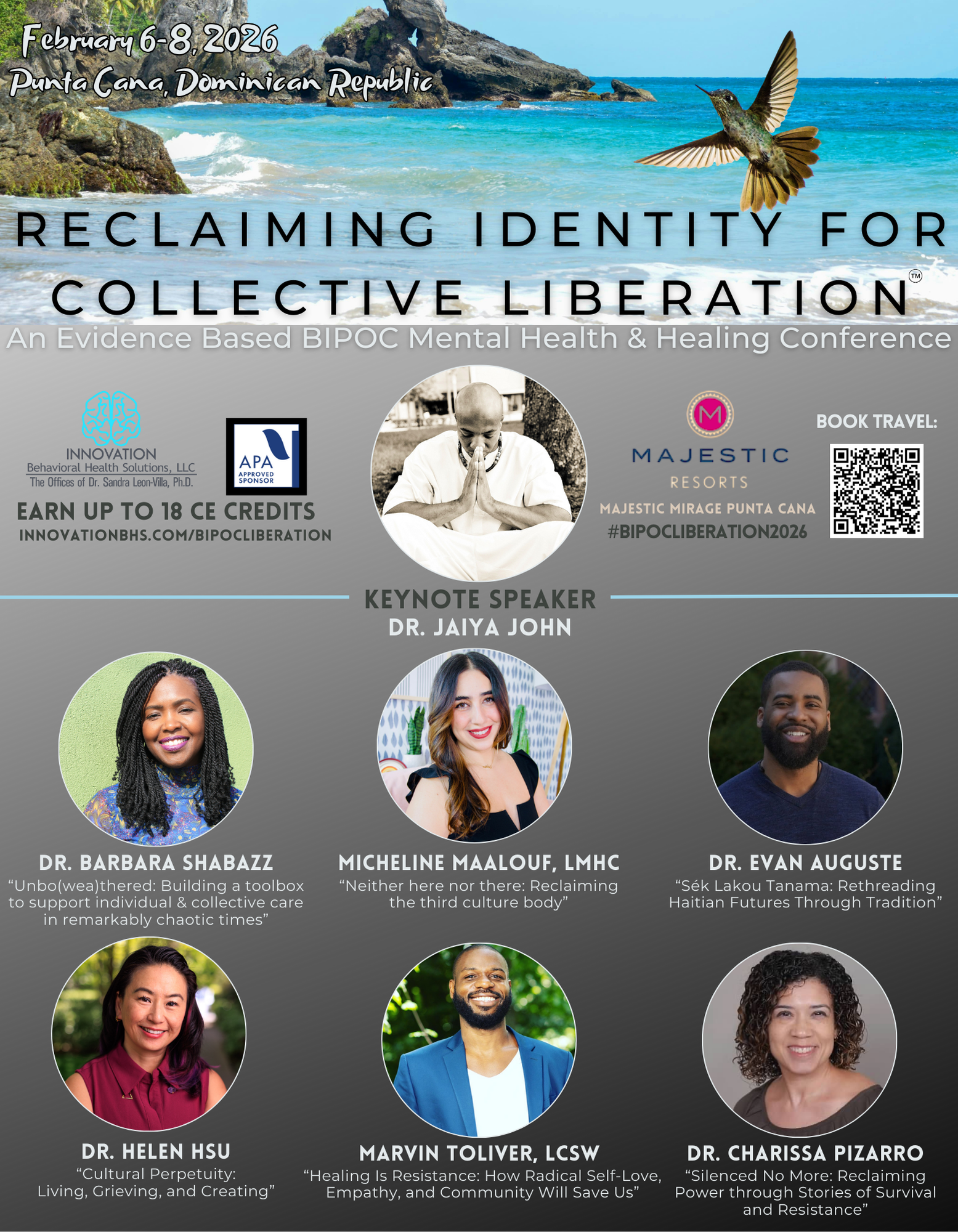
2026 Reclaiming Identity for Collective Liberation Conference
Earn up to 18 CEs! Join us for the 4th annual Reclaiming Identity for Collective Liberation Conference! We will be gathering in the Dominican Republic February 6-8, 2026. Register now!
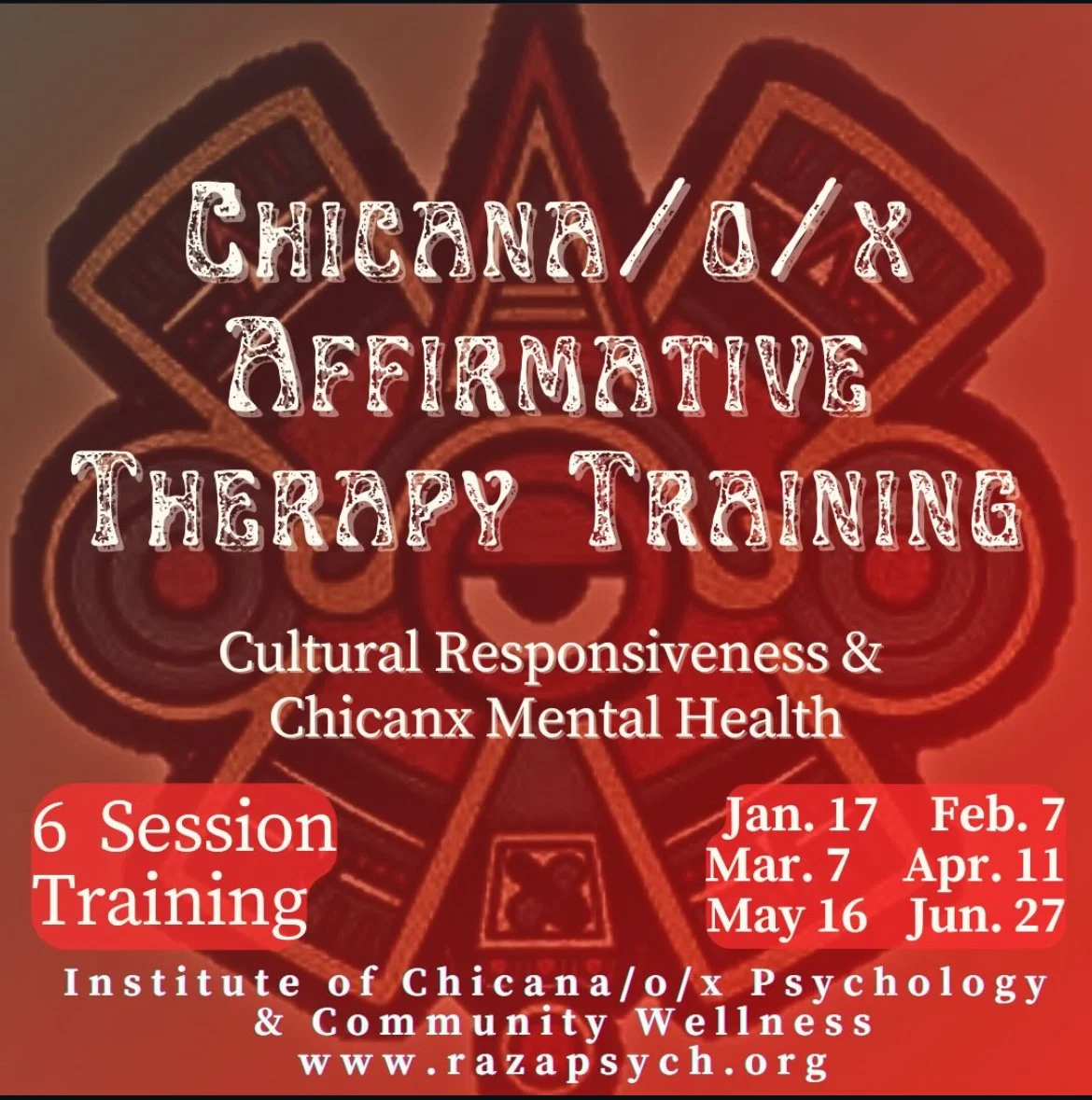
Chicana/o/x Affirmative Therapy Training Series: Clinical Responsiveness & Chicanx Mental Health
15hr Training. *MUST attend all sessions live for CE credit.
As a result of this training participants will understand the framework for a Chicana/o/x Affirmative approach, understand how a focus on identity, family, and spirituality are key in a Chicanx Affirmative approach, learn to be culturally responsive to Chicana/x/o culture in clinical interactions, gain an understanding of varying notions of mental well-being from a Chicana/o/x perspective, and apply these concepts with case scenarios in each training session. Features of the training series are: Constructing Chicana/o/x wellness & well-being, the roles of identity, family, and spirituality for Chicana/o/x mental health, facilitating a reconnection to current and ancestral cultural strengths in clinical practice, aspects of Chicana/o/x culture that complements the practice of counseling & therapy, values & assumptions of the mental health field that are not congruent with Chicana/o/x wellness culture, the impacts of marginalization and discrimination on Chicana/o/x well-being on an individual and community level, and the inclusion of historical trauma in the treatment of Chicana/o/x populations.

2025 Reclaiming Identity for Collective Liberation
Join us at Dreams Las Mareas Costa Rica 02/11-02/13/2025 for the 3rd Annual Reclaiming Identity for Collective Liberation conference
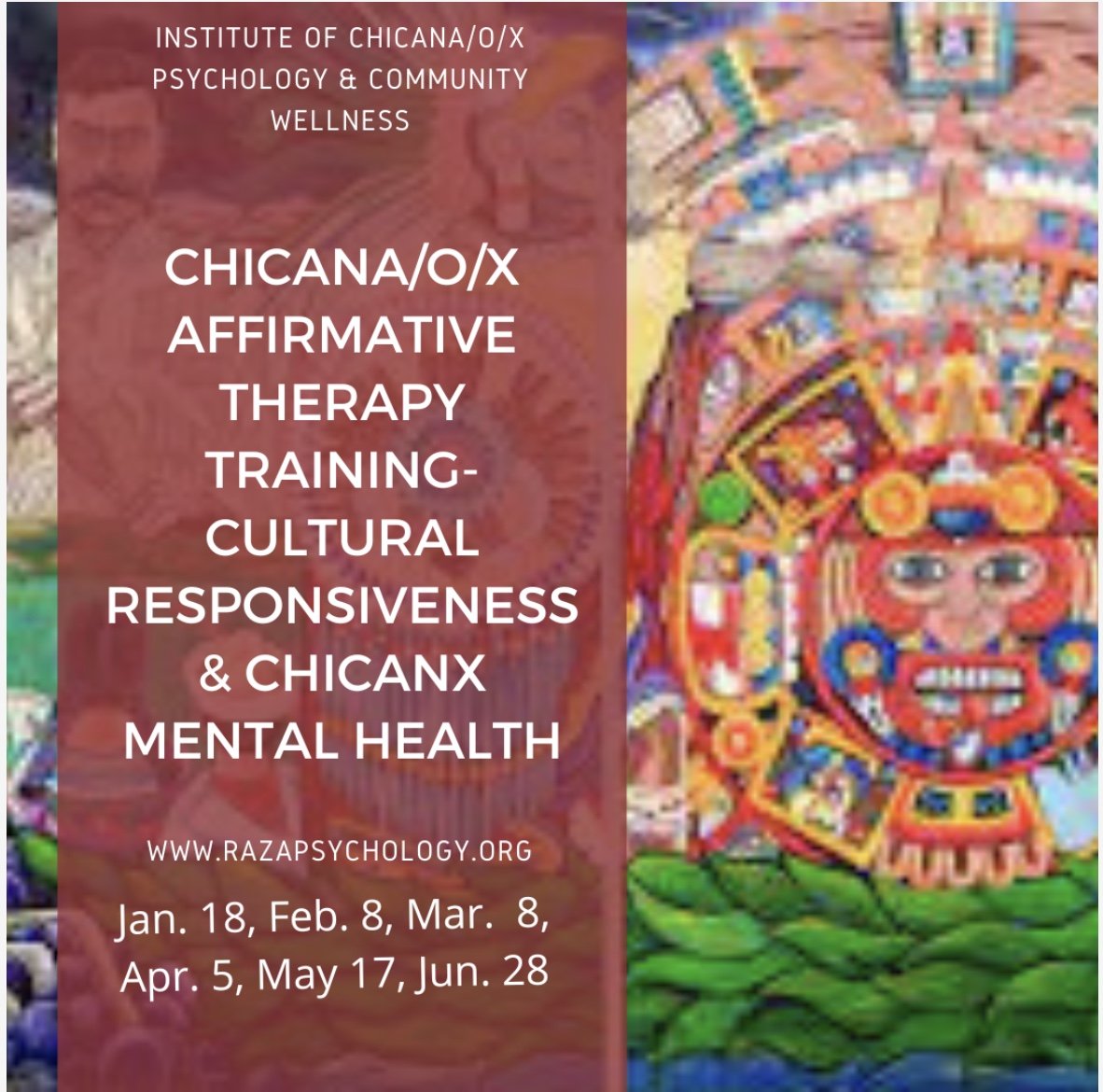
Chicana/o/x Affirmative Therapy Training Series: Clinical Responsiveness & Chicanx Mental Health- 15 CEs
Sponsored Collaboration with the Institute of Chicana/o/x Psychology and Community Wellness’ training program. Learn more here.