
Death of the Blank Slate
Acknowledging Our Lived Experience And Spirit When In The Therapeutic Space
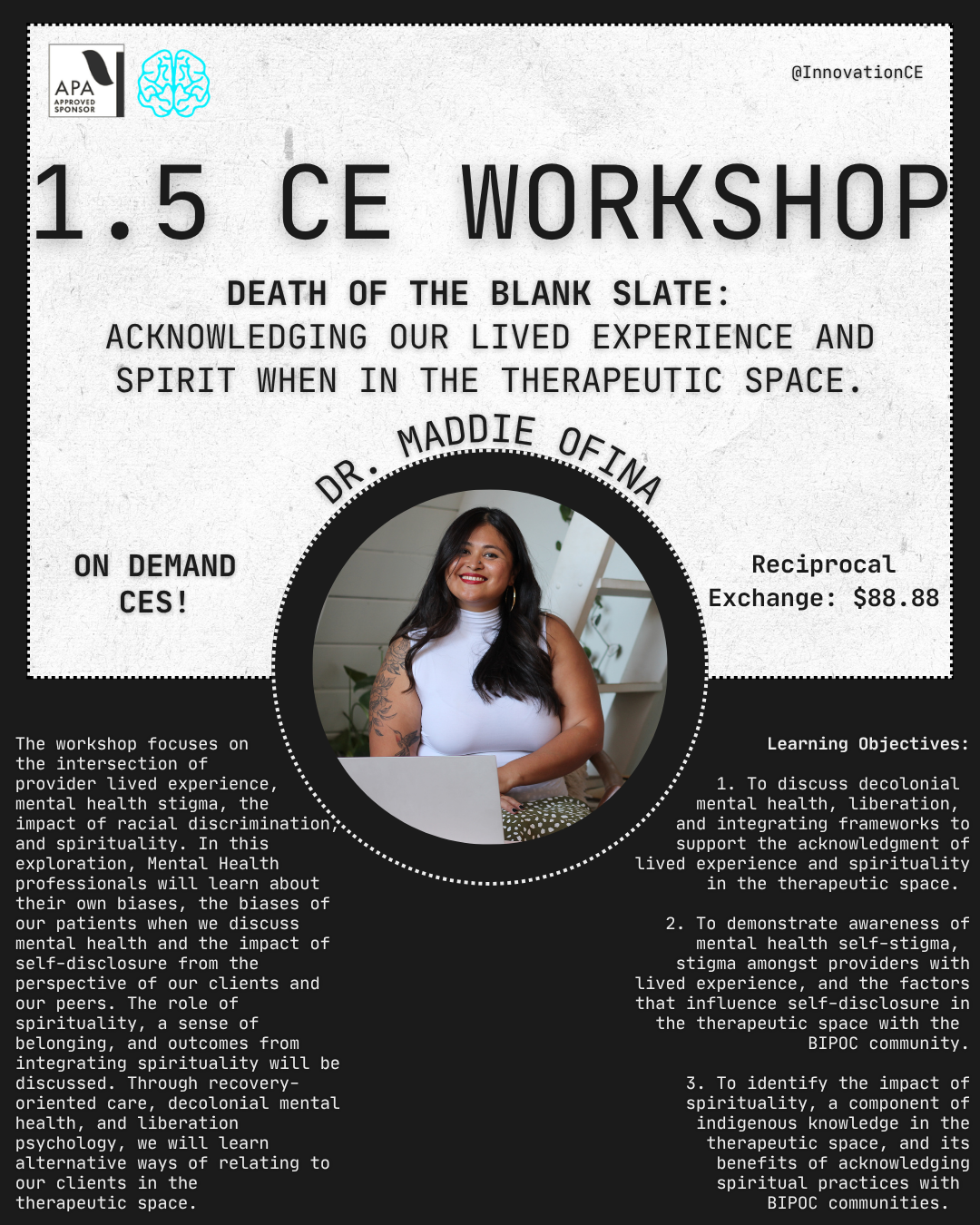
Dr. Madeline Ofina 1.5 CEs
Death of the Blank Slate: Acknowledging Our Lived Experience And Spirit When In The Therapeutic Space.
The workshop focuses on the intersection of provider lived experience, mental health stigma, the impact of racial discrimination, and spirituality. In this exploration, Mental Health professionals will learn about their own biases, the biases of our patients when we discuss mental health and the impact of self-disclosure from the perspective of our clients and our peers. The role of spirituality, a sense of belonging, and outcomes from integrating spirituality will be discussed. Through recovery-oriented care, decolonial mental health, and liberation psychology, we will learn alternative ways of relating to our clients in the therapeutic space.
Learning Objectives:
To discuss decolonial mental health, liberation, and integrating frameworks to support the acknowledgment of lived experience and spirituality in the therapeutic space.
To demonstrate awareness of mental health self-stigma, stigma amongst providers with lived experience, and the factors that influence self-disclosure in the therapeutic space with the BIPOC community.
To identify the impact of spirituality, a component of indigenous knowledge in the therapeutic space, and its benefits of acknowledging spiritual practices with BIPOC communities.
References:
Bassman, R. (1997). The Mental Health System: Experiences From Both Sides of the Locked Doors. Professional Psychology: Research and Practice, 28(3), 238–242. https://doi.org/ 10.1037/0735-7028.28.3.238
Boyd, J. E., Zeiss, A., Reddy, S., & Skinner, S. (2016). Accomplishments of 77 VA mental health professionals with a lived experience of mental illness. American Journal of Orthopsychiatry, 86(6), 610.
Burnett, C., Purkey, E., Davison, C. M., Watson, A., Kehoe, J., Traviss, S., Nolan, D., & Bayoumi, I. (2022). Spirituality, Community Belonging, and Mental Health Outcomes of Indigenous Peoples during the COVID-19 Pandemic. International journal of environmental