
 Image 1 of 1
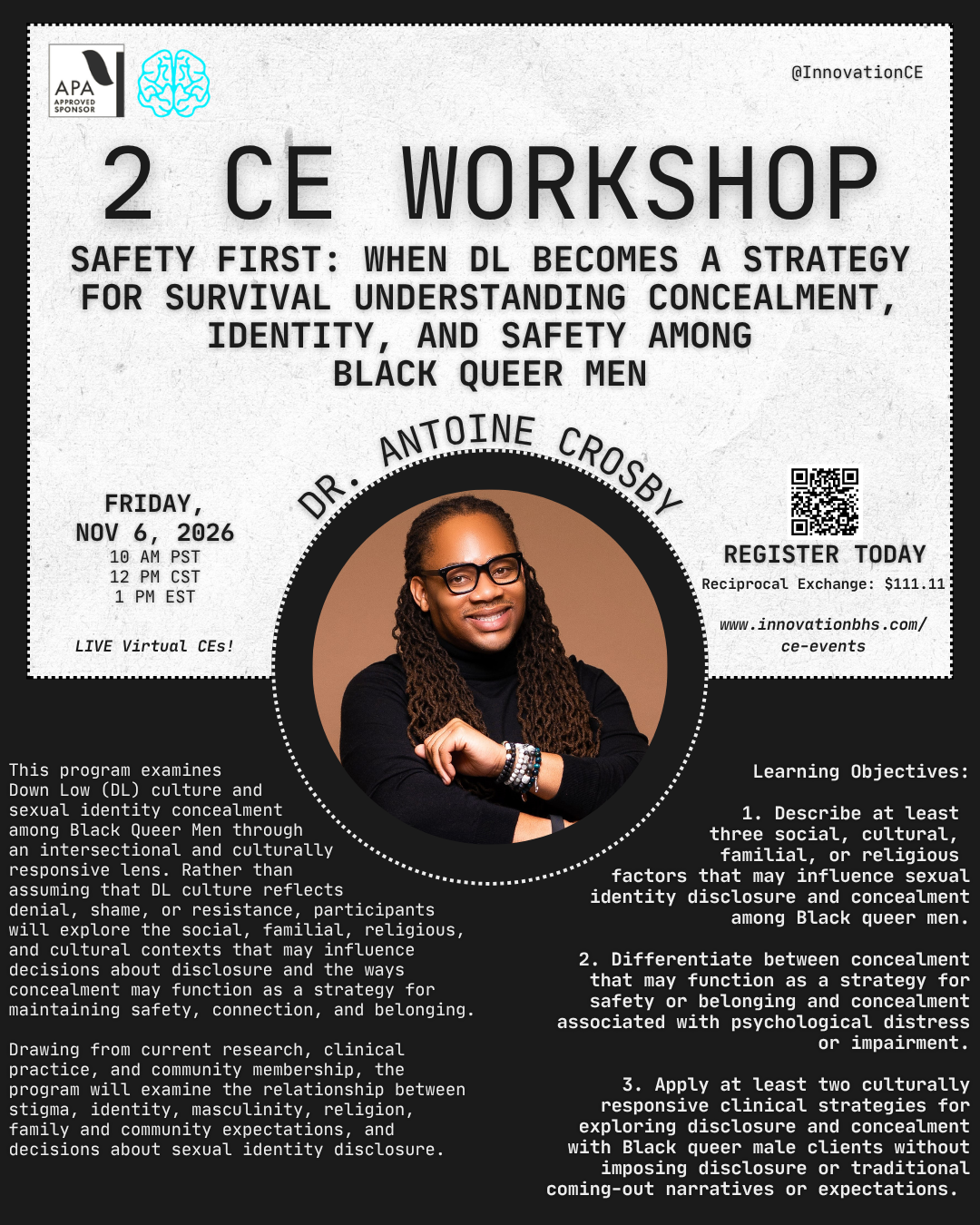
Facilitator: Dr. Antoine Crosby
Location: Zoom (live event). You will receive link 72 hours prior to the training.
Date: Friday, November 6, 2026
Time: 10 am PST, 12 PM CST, 1 pm EST
Cost: $111.11 + 3% processing fees
Description
This program examines Down Low (DL) culture and sexual identity concealment among Black Queer Men through an intersectional and culturally responsive lens. Rather than assuming that DL culture reflects denial, shame, or resistance, participants will explore the social, familial, religious, and cultural contexts that may influence decisions about disclosure and the ways concealment may function as a strategy for maintaining safety, connection, and belonging.
Drawing from current research, clinical practice, and community membership, the program will examine the relationship between stigma, identity, masculinity, religion, family and community expectations, and decisions about sexual identity disclosure. Participants will consider both the protective functions and the potential psychological costs of concealment, and learn clinical strategies for assessing the role of concealment without imposing disclosure or traditional “coming out” narratives on clients. Case examples will be used to help participants apply these concepts in clinical practice.
Learning Objectives:
Describe at least three social, cultural, familial, or religious factors that may influence sexual identity disclosure and concealment among Black queer men.
Differentiate between concealment that may function as a strategy for safety or belonging and concealment associated with psychological distress or impairment.
Apply at least two culturally responsive clinical strategies for exploring disclosure and concealment with Black queer male clients without imposing disclosure or traditional coming-out narratives or expectations.
References
Keene, L.C., Heath, R.D., & Bouris, A. (2002). Disclosure of sexual identities across social-relational contexts: Findings from a national sample of Black sexual minority men. Journal of Racial and Ethnic Health Disparities, 9(1), 201-214.
Berman, M., Eaton, L.A., Watson, R. J., Earnshaw, V.A., Wiginton, J. M., & Layland, E. (2023). Factors associated with disclosure of sexual orientation among Black sexual minority men. LGBT Health, 10(1), 51-61.
Craig, A., Walsh, J., & Quinn, K. (2024). Intersectional microaggressions, sexual identity concealment, and mental health of young Black sexual minority men and transgender women. Archives of Sexual Behavior, 54(4), 1245-1254.
Facilitator: Dr. Antoine Crosby
Location: Zoom (live event). You will receive link 72 hours prior to the training.
Date: Friday, November 6, 2026
Time: 10 am PST, 12 PM CST, 1 pm EST
Cost: $111.11 + 3% processing fees
Description
This program examines Down Low (DL) culture and sexual identity concealment among Black Queer Men through an intersectional and culturally responsive lens. Rather than assuming that DL culture reflects denial, shame, or resistance, participants will explore the social, familial, religious, and cultural contexts that may influence decisions about disclosure and the ways concealment may function as a strategy for maintaining safety, connection, and belonging.
Drawing from current research, clinical practice, and community membership, the program will examine the relationship between stigma, identity, masculinity, religion, family and community expectations, and decisions about sexual identity disclosure. Participants will consider both the protective functions and the potential psychological costs of concealment, and learn clinical strategies for assessing the role of concealment without imposing disclosure or traditional “coming out” narratives on clients. Case examples will be used to help participants apply these concepts in clinical practice.
Learning Objectives:
Describe at least three social, cultural, familial, or religious factors that may influence sexual identity disclosure and concealment among Black queer men.
Differentiate between concealment that may function as a strategy for safety or belonging and concealment associated with psychological distress or impairment.
Apply at least two culturally responsive clinical strategies for exploring disclosure and concealment with Black queer male clients without imposing disclosure or traditional coming-out narratives or expectations.
References
Keene, L.C., Heath, R.D., & Bouris, A. (2002). Disclosure of sexual identities across social-relational contexts: Findings from a national sample of Black sexual minority men. Journal of Racial and Ethnic Health Disparities, 9(1), 201-214.
Berman, M., Eaton, L.A., Watson, R. J., Earnshaw, V.A., Wiginton, J. M., & Layland, E. (2023). Factors associated with disclosure of sexual orientation among Black sexual minority men. LGBT Health, 10(1), 51-61.
Craig, A., Walsh, J., & Quinn, K. (2024). Intersectional microaggressions, sexual identity concealment, and mental health of young Black sexual minority men and transgender women. Archives of Sexual Behavior, 54(4), 1245-1254.